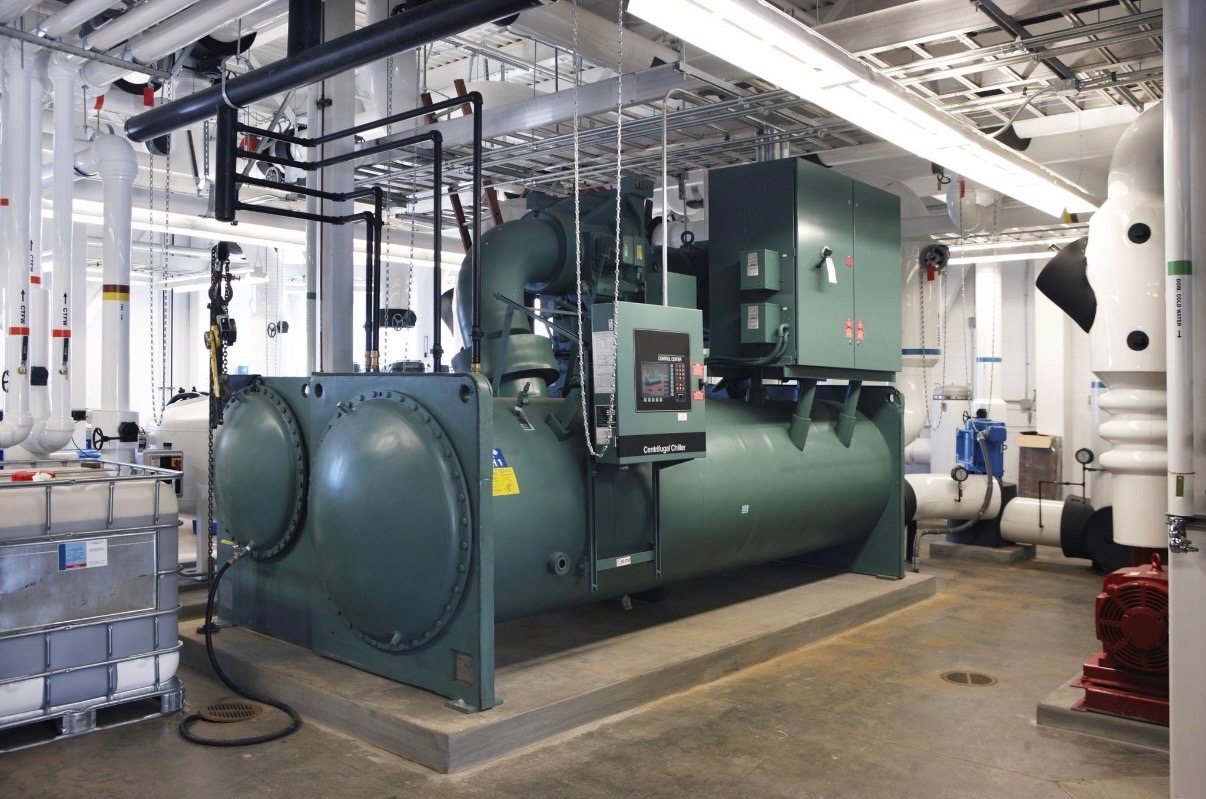
Used Chiller Buyers in Washington Parish, Louisiana
A buyer for your chiller
An owner with a surplus industrial chiller in Washington Parish, Louisiana can begin with photographs and available records; no equipment testing is required. We buy chillers and provide an upfront cash offer. The buyer handles crane service, rigging, disconnects, refrigerant recovery, loading, hauling and freight, coordinating with authorized site personnel. An unknown detail is worth flagging; it does not need to be turned into a guess.
Identify the machine
A short identification packet can save a later round of questions: photograph the unit as installed, its accessible nameplate and any separate cabinet included in the transaction. List the model, serial number and rated cooling capacity if legible. Missing documentation is not a barrier to starting a conversation, and the seller does not need to take panels off.
Cooling tons and transport size
If a modular bank is involved, a building's total capacity can obscure the size of each piece. State how many modules are offered and which nameplate rating applies to each, if visible. The freight team also needs the actual outside dimensions and documented weight: a cooling ton is a capacity measure, not the weight of a shipping load.
Locating the equipment
Washington Parish is in southeast Louisiana's Florida Parishes along the Mississippi state line. Give the actual building and entrance rather than assuming the parish seat or a regional landmark is the chiller's location. Provide the street address, the unit's position on the property, and known gate, loading or security limits. These details help the buyer's freight and rigging teams assess the real path to the machine rather than plan from a parish name alone.
What is actually included?
An equipment name may describe heat rejection, a compressor, or a modular system rather than the complete installation. Share exterior pictures of the whole machine, visible connections and any separate controls. Indicate which components are included and which must remain. If you are unsure whether the unit is air-cooled, water-cooled or configured another way, leave that question open for review.
Make the equipment list clear
For a multi-unit property, separate the inventory by building, room and machine. Include the plate details and any separate components that are safely identifiable, and distinguish what is being offered from equipment still needed on site. The buyer can then discuss the actual scope and handling requirements without treating a building-wide cooling figure as a single unit's capacity.
When the charge is uncertain
Tell the buyer whether a refrigerant designation comes from a nameplate, a later conversion label or a service record. If the source is missing or the charge is unknown, say that plainly. The buyer handles recovery with qualified personnel. There is no reason for the seller to fit gauges, open a valve, mix refrigerants or release any contents.
Piping and shared loops
Drawings may show whether the chiller interfaces with building water, condenser water or a process circuit. Send what the site has and identify any lines believed to be shared with equipment that stays. The buyer's qualified disconnect team coordinates the work with authorized site personnel, who identify isolation boundaries and known fluid-handling or contamination requirements.
Identify shared power equipment
A separate power cabinet can affect both the sale scope and the removal route. If known, provide the nameplate voltage, phase and frequency and say whether the cabinet serves only this machine. Site personnel and the buyer's qualified disconnect team coordinate electrical isolation; never open a cabinet or attempt electrical work merely to gather details for the buyer.
Coordinate with the facility
An approved work window and a site contact are more useful than a proposed date that no one has confirmed. Identify access, escort and shutdown restrictions, and explain which cooling or process services must continue. The buyer coordinates the removal work with authorized personnel. Where the schedule or operating boundaries remain undecided, flag those questions for the facility rather than guessing.
Information for the rigger
The buyer handles the crane and rigging, with a professional lift plan based on the particular machine and site. Share documented weights, manufacturer lifting instructions and photos of visible lifting-point markings if available. Identify overhead wires, nearby structures, ground or floor limits and possible staging space. Do not select a lift point or attempt to separate components yourself; the rigger evaluates the actual conditions.
From the chiller to the loading area
A rooftop, basement, mechanical room and fenced yard each create different access questions. Provide the actual building and unit location, any known opening dimensions and a safe photo of the route. Mention screens, parapets, overhead services or a tight corner if present. Site restrictions should be confirmed with authorized staff rather than inferred from a map or from the machine's size.
Loading and the road out
If a unit or separate cabinet has to be staged before loading, tell the buyer what space the facility can make available and any restrictions on its use. Share measurements, documented weights and the route through the gate. The buyer arranges loading, hauling and freight; its personnel assess whether the proposed route and vehicle access are workable for the actual load.
Send the information on hand
A useful first message does not need every field completed. Identify the chiller and its location, send safe photographs and disclose known damage, missing records or access restrictions. The buyer provides an upfront cash offer without requiring equipment testing and handles the removal work in coordination with the site. Further details can be clarified as the actual scope is reviewed.