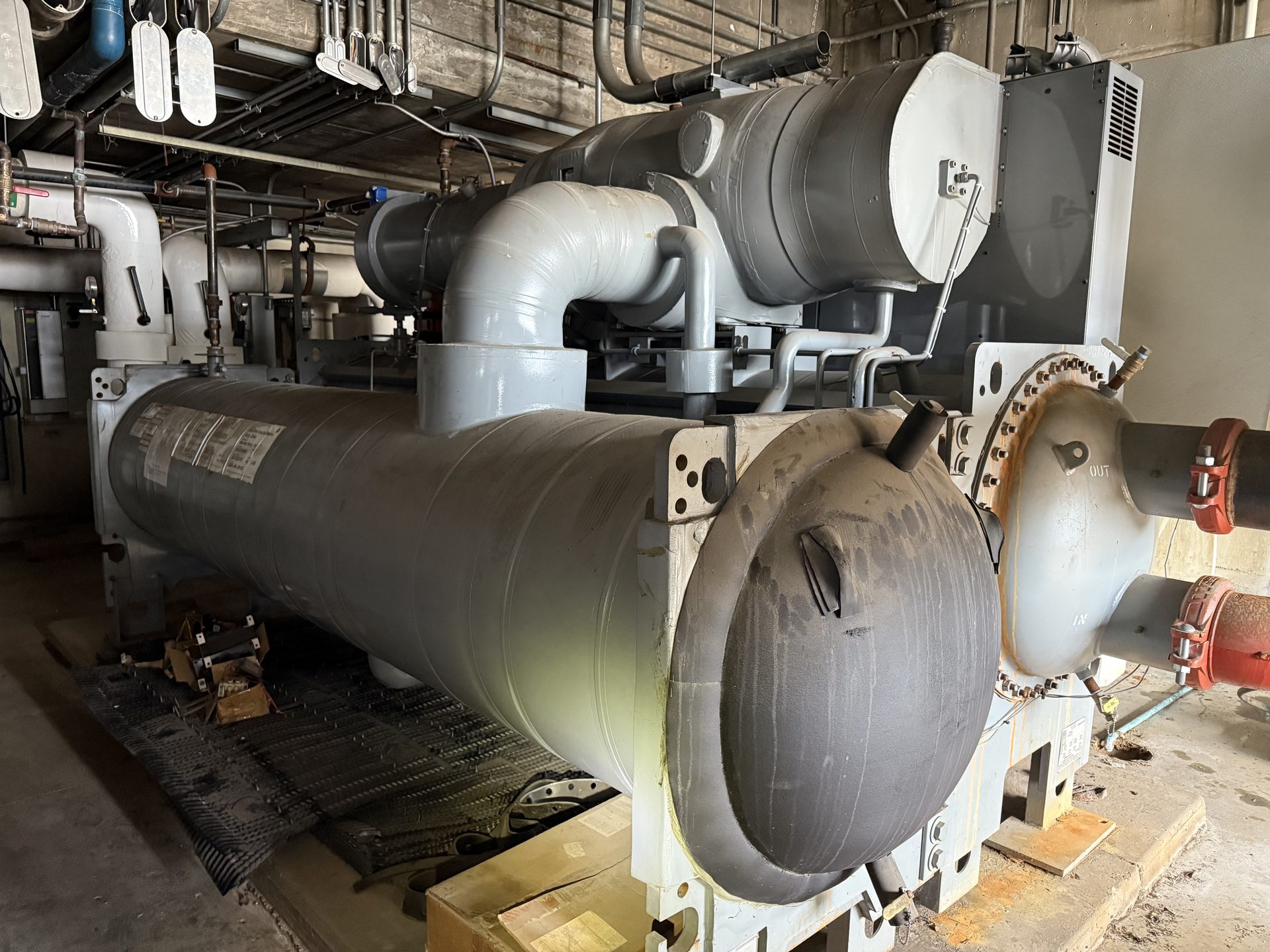
Industrial Chiller Buyers in Metairie, Louisiana
Offer and removal scope
An owner with a surplus industrial chiller in Metairie, Louisiana can begin with photographs and available records; no equipment testing is required. We buy chillers and provide an upfront cash offer. The buyer handles crane service, rigging, disconnects, refrigerant recovery, loading, hauling and freight, coordinating with authorized site personnel. An unknown detail is worth flagging; it does not need to be turned into a guess.
Access starts at the unit
The first obstacle may be inside the building rather than on the road. Tell the buyer where the unit sits, how it is reached and where a truck might be allowed to load. Identify narrow openings, overhead obstructions and any restricted travel paths from existing measurements. The buyer's professional team verifies the route and determines the handling plan for the specific equipment.
Capacity is not shipping weight
A capacity on a plant schedule may cover several machines, while a module plate may describe only one. Identify which figure applies to the equipment being offered. For moving it, the more relevant information is the physical envelope, documented weight and any protruding connections. If those details are missing, say so; a cooling-ton figure cannot be converted into a dependable lift weight.
Crane and rigging considerations
If a unit is above grade or inside a constrained room, describe the possible route and any known structural or overhead limits. A safe photo of the surrounding area can help, along with unit-specific rigging documents. The buyer's rigging team assesses lift points, crane position and whether components can move as assembled. The seller is not expected to perform rigging or dismantling.
Where can the truck load?
The relevant address for a pickup includes more than a postal code. Identify the truck entrance, security requirements and the point at which equipment can be loaded, if the site has selected one. Documented weight and physical dimensions are important to planning the load. The buyer handles loading, hauling and freight, coordinating the approach with the facility and rigging team.
The details worth sending
Give the buyer enough information to distinguish the machine from adjacent equipment: an overall photograph, a legible plate and the location of any separate controls included. The model and serial number are useful where visible, but a partial record is still a reasonable starting point. Mark any values copied from old documentation rather than the plate itself.
Local context, actual site
The regional context for Metairie includes greater New Orleans west of the city. It is in Jefferson Parish. A commercial or institutional property may have restricted loading space; give the actual entrance and dimensions of the removal path. A regional route or facility category cannot establish the conditions at a particular property. Provide the street address, building or yard location, and any known gate, loading or access restrictions for the actual chiller.
Map the components
When there are several similar machines, identify the one that is surplus and photograph it in context. List any separate starter, drive, control or module that belongs to the proposed purchase, but do not assume a nearby component is part of it. A drawing or equipment schedule can show the arrangement; incomplete records are still useful when their gaps are identified.
One machine or several?
For a multi-unit property, separate the inventory by building, room and machine. Include the plate details and any separate components that are safely identifiable, and distinguish what is being offered from equipment still needed on site. The buyer can then discuss the actual scope and handling requirements without treating a building-wide cooling figure as a single unit's capacity.
What you can see safely
A photo of the whole machine, close views of visible wear and a short note about known faults provide useful context. If there was a shutdown or previous repair, include the date only when known and distinguish a recollection from a documented record. The buyer can review the information without asking you to run or test the chiller.
Power and separate controls
A separate power cabinet can affect both the sale scope and the removal route. If known, provide the nameplate voltage, phase and frequency and say whether the cabinet serves only this machine. Site personnel and the buyer's qualified disconnect team coordinate electrical isolation; never open a cabinet or attempt electrical work merely to gather details for the buyer.
Fluid connections and isolation
Do not assume a nearby pipe can be drained just because the chiller is surplus. Other equipment may use the same loop, and a process line can require site-specific precautions. Share existing labels and drawings, or note that the contents are unknown. The buyer handles the disconnect work with qualified personnel and the facility's authorized team.
When the charge is uncertain
A refrigerant label should travel with any later retrofit or service documentation so the recovery team sees the whole recorded history. Give the stated quantity only if documented and describe known damage without touching the circuit. The buyer arranges appropriately qualified personnel for recovery; leave valves closed and never vent refrigerant to make a machine easier to move.
Keep remaining services in view
Before removal, define what stays in service and who can authorize work at the property. Existing site rules may cover escorts, work windows, protected areas or shared utilities. The buyer arranges the removal team and coordinates with authorized personnel; the site supplies its requirements. Any window discussed is a planning input, not a promise that a particular date will be available.