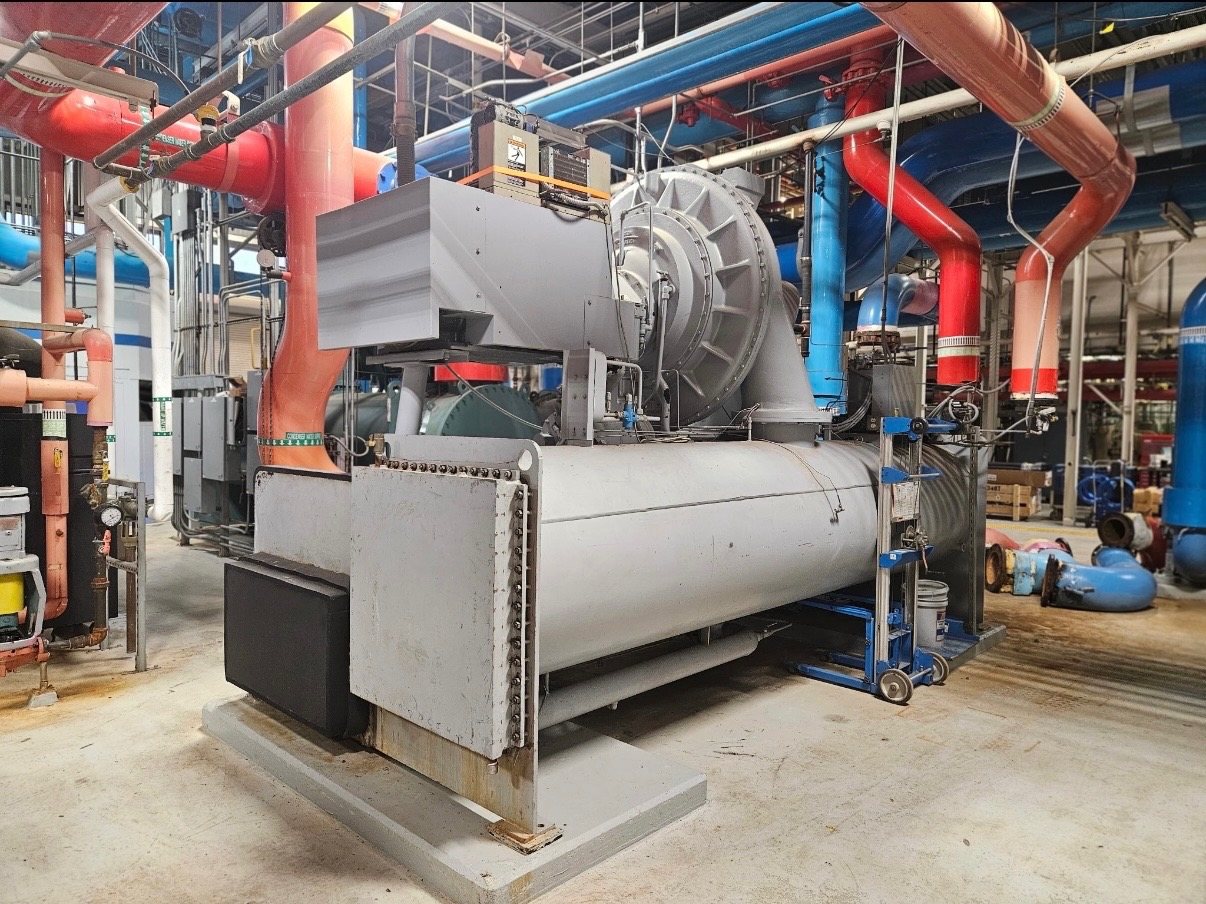
Used Chiller Buyers in East Carroll Parish, Louisiana
A practical way to start
We purchase a surplus industrial chiller in East Carroll Parish, Louisiana; we do not sell chillers. The process starts with an upfront cash offer based on the information available, with no equipment test required. The buyer handles crane service, rigging, disconnects, refrigerant recovery, loading, hauling and freight. Site staff and appropriately qualified personnel coordinate the work around actual equipment and facility constraints.
The details worth sending
A short identification packet can save a later round of questions: photograph the unit as installed, its accessible nameplate and any separate cabinet included in the transaction. List the model, serial number and rated cooling capacity if legible. Missing documentation is not a barrier to starting a conversation, and the seller does not need to take panels off.
Define the purchase scope
A list of assets is especially useful when one room contains multiple similar chillers. Pair each plate photo with a location and say which machine, modules and separate cabinets are included. Identify anything shared or excluded. A plant-wide schedule can accompany the list, but a combined cooling total should not be presented as the rating of each individual unit.
Describe the configuration
Describe the actual configuration rather than relying on one broad label. Air-cooled and water-cooled describe how heat is rejected; centrifugal, screw and scroll refer to compressor types, and a chiller can have one description from each group. If you do not know the arrangement, exterior photos and available documents are enough to start. Avoid removing panels or assuming a compressor type from the brand.
Report condition without a test
Idle equipment does not need to be restarted to demonstrate it. Share a dated service record if available, note missing parts and describe only damage visible from a safe position. If the unit was removed from service for a known reason, explain that without claiming an internal diagnosis. The buyer can assess the submission without a test run.
Measure the load, not just the rating
When a record says tons, ask whether that figure describes cooling output for one unit or for a group. It is not the load weight for rigging. Supply physical dimensions and a documented shipping or operating weight if known, and specify whether protrusions and separate cabinets are included. If the document does not say, let the buyer know rather than filling the gap with an estimate.
Parish context and the real address
East Carroll Parish is in northeast Louisiana on the Mississippi River. If a river crossing affects the actual route, tell the freight team; a parish-wide description does not prove that any particular bridge is involved. Provide the street address, the unit's position on the property, and known gate, loading or security limits. These details help the buyer's freight and rigging teams assess the real path to the machine rather than plan from a parish name alone.
Plan the disconnects safely
Existing drawings and exterior photos can help identify electrical interfaces, including a remote starter or shared controls. Record plate voltage and phase only if safely visible; an unreadable value can remain unknown. The buyer arranges qualified electrical disconnects in coordination with the site, so there is no reason for the owner to expose conductors or test the system.
Refrigerant records and recovery
If the refrigerant is unknown, say so rather than guessing from the make or compressor type. A photo of the original plate, any later conversion label and existing service notes gives the recovery team a starting point. Recovery is handled by the buyer's appropriately qualified personnel; the seller should neither open the circuit nor vent or mix its contents.
Keep remaining services in view
An approved work window and a site contact are more useful than a proposed date that no one has confirmed. Identify access, escort and shutdown restrictions, and explain which cooling or process services must continue. The buyer coordinates the removal work with authorized personnel. Where the schedule or operating boundaries remain undecided, flag those questions for the facility rather than guessing.
From the chiller to the loading area
The first obstacle may be inside the building rather than on the road. Tell the buyer where the unit sits, how it is reached and where a truck might be allowed to load. Identify narrow openings, overhead obstructions and any restricted travel paths from existing measurements. The buyer's professional team verifies the route and determines the handling plan for the specific equipment.
Plan the lift around the site
If the machine must pass through a building opening or over a parapet, show the riggers the relevant route and any measurements already on file. Provide the unit-specific lifting documents and known weights where available. The buyer arranges crane and rigging services; the professional team decides on lifting points and whether an approved component separation is needed.
Freight begins at the gate
Moving a chiller off its foundation and getting it onto a truck are separate planning steps. Show the proposed staging and loading area, identify any site traffic restrictions and share the measurements you have. The buyer coordinates loading, hauling and freight with the riggers. If the route or truck position is unknown, say so rather than assuming a particular vehicle will fit.
A practical first message
To request an upfront cash offer, send the buyer the equipment details and photographs you already have, together with the location and site contact. A missing serial number, incomplete service history or unknown refrigerant can be noted rather than guessed. No equipment testing is required. The buyer reviews the information and coordinates the removal scope and site requirements with the authorized representative.