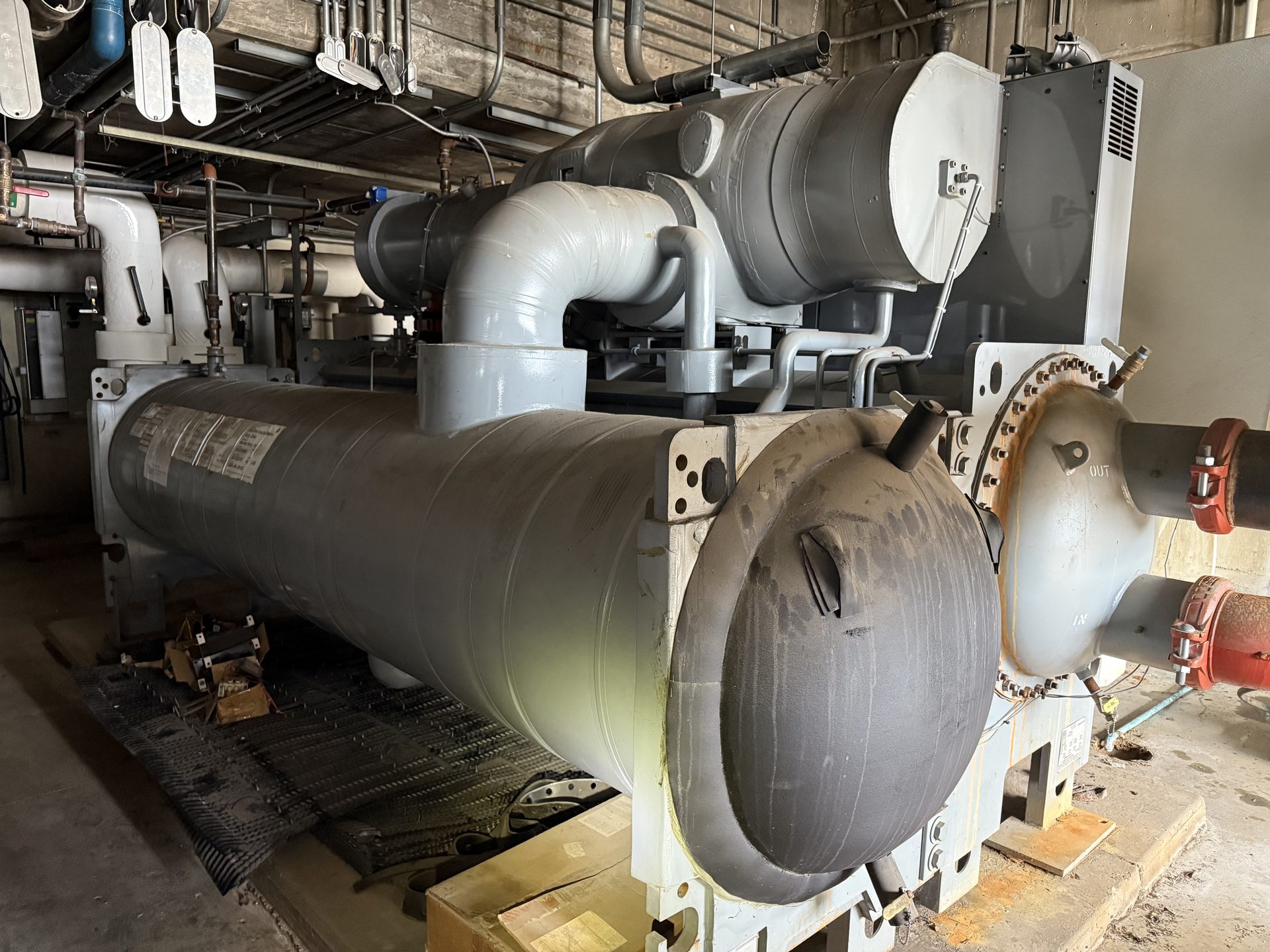
Used Chiller Buyers in Cameron Parish, Louisiana
A buyer for your chiller
If you have a surplus industrial chiller in Cameron Parish, Louisiana, we buy chillers rather than sell them. Share what you know for an upfront cash offer; no equipment testing is required. The buyer handles crane service, rigging, disconnects, refrigerant recovery, loading, hauling and freight, coordinating qualified personnel with the site. A precise inventory and an honest account of access restrictions help shape the removal plan.
Keep remaining services in view
A chiller can be surplus while nearby systems remain essential. Ask the authorized facility representative to identify protected services, shared controls and the people who can approve access. The buyer arranges the work and coordinates the plan with the site, including any qualified disconnect and recovery personnel. Treat timing as subject to actual site approval, not a guaranteed removal date.
Make the equipment list clear
If several chillers are available, list each machine separately with its location, model and rated capacity where known. Mark missing parts and distinguish individual modules from a complete bank. Identify control cabinets or other components included in the proposed purchase and anything that must stay. A separate line for each asset helps the buyer plan recovery, lifting and freight without confusing plant totals with unit ratings.
Parish context and the real address
Cameron Parish is in southwest Louisiana Gulf Coast, south of Lake Charles. Give the actual building and entrance rather than assuming the parish seat or a regional landmark is the chiller's location. Provide the street address, the unit's position on the property, and known gate, loading or security limits. These details help the buyer's freight and rigging teams assess the real path to the machine rather than plan from a parish name alone.
Start with the nameplate
Match the chiller to its records before sending an equipment list. A photo of the complete machine and a close view of the nameplate help distinguish it from neighboring assets; an equipment schedule can fill some gaps. Tell the buyer when a model, serial number or capacity comes from a drawing rather than the actual plate, and leave uncertain details marked as such.
What is actually included?
An equipment name may describe heat rejection, a compressor, or a modular system rather than the complete installation. Share exterior pictures of the whole machine, visible connections and any separate controls. Indicate which components are included and which must remain. If you are unsure whether the unit is air-cooled, water-cooled or configured another way, leave that question open for review.
A useful condition history
Describe the condition you can actually observe: visible corrosion, missing covers or controls, known damage, or whether the machine has been idle. Provide maintenance records if they exist, but do not infer a working condition from an old invoice. No equipment test is required for a cash offer, and a seller should not start the unit or open electrical or refrigerant components to collect information.
Identify shared power equipment
An electrical schedule may identify voltage, phase, frequency and a remote starter even when the main machine is disconnected. Share the documents and safe exterior photos, noting whether controls are included or serve other units. The buyer coordinates qualified electrical disconnect personnel with the site. Do not open energized or closed cabinets, test circuits or disturb wiring to prepare a description.
Refrigerant records and recovery
A label and a service record can tell different parts of the chiller's refrigerant history. Send both, identify the machine they belong to, and note any uncertainty about the designation or quantity. The buyer coordinates appropriately qualified recovery personnel for the actual system. Leave valves and connections untouched and do not release refrigerant, even if the unit has been idle for years.
Measure the load, not just the rating
The buyer needs two different kinds of size information. Rated cooling tons describe performance, whereas transport planning depends on the actual length, width, height and documented weight of each piece. Explain whether a figure covers the whole chiller or a single module and whether a starter or other enclosure is separate. Do not estimate a load weight from cooling capacity.
The route out of the building
The first obstacle may be inside the building rather than on the road. Tell the buyer where the unit sits, how it is reached and where a truck might be allowed to load. Identify narrow openings, overhead obstructions and any restricted travel paths from existing measurements. The buyer's professional team verifies the route and determines the handling plan for the specific equipment.
Information for the rigger
If a unit is above grade or inside a constrained room, describe the possible route and any known structural or overhead limits. A safe photo of the surrounding area can help, along with unit-specific rigging documents. The buyer's rigging team assesses lift points, crane position and whether components can move as assembled. The seller is not expected to perform rigging or dismantling.
Where can the truck load?
The relevant address for a pickup includes more than a postal code. Identify the truck entrance, security requirements and the point at which equipment can be loaded, if the site has selected one. Documented weight and physical dimensions are important to planning the load. The buyer handles loading, hauling and freight, coordinating the approach with the facility and rigging team.