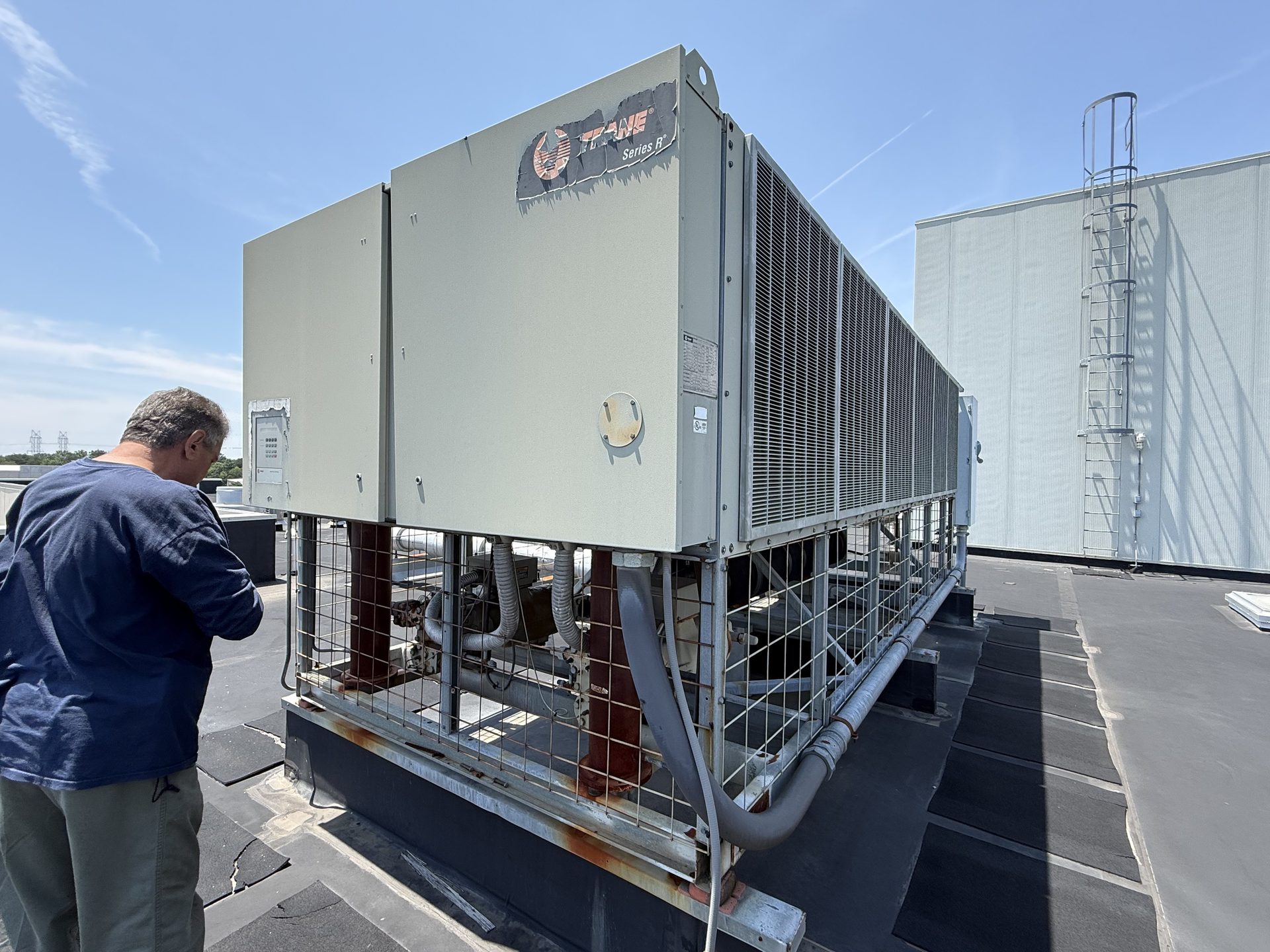
Used Chiller Buyers in Beauregard Parish, Louisiana
From surplus unit to removal
An owner with a surplus industrial chiller in Beauregard Parish, Louisiana can begin with photographs and available records; no equipment testing is required. We buy chillers and provide an upfront cash offer. The buyer handles crane service, rigging, disconnects, refrigerant recovery, loading, hauling and freight, coordinating with authorized site personnel. An unknown detail is worth flagging; it does not need to be turned into a guess.
Locating the equipment
Beauregard Parish is in western Louisiana near the Texas border. If the site's route has a highway, border-area or access restriction, identify the actual entrance; regional location alone does not describe the loading area. Provide the street address, the unit's position on the property, and known gate, loading or security limits. These details help the buyer's freight and rigging teams assess the real path to the machine rather than plan from a parish name alone.
The details worth sending
Before compiling an equipment list, check whether the record identifies an individual chiller or the whole plant. Send the buyer the safest available photograph of the actual unit and its label, together with any matching schedule. A plate that is obscured or missing can be described honestly; do not remove a cover or enter a restricted area to obtain it.
Separate the assets that stay
Define the boundaries of the proposed purchase before arranging a lift. Photograph the machine in place, list any included starter or controls, and mark equipment that will remain. For a bank, distinguish individual modules from the total system. When ownership or inclusion of a component is uncertain, tell the buyer and resolve it with the authorized site representative.
Map the components
Describe the actual configuration rather than relying on one broad label. Air-cooled and water-cooled describe how heat is rejected; centrifugal, screw and scroll refer to compressor types, and a chiller can have one description from each group. If you do not know the arrangement, exterior photos and available documents are enough to start. Avoid removing panels or assuming a compressor type from the brand.
Measure the load, not just the rating
A truck and crane are selected around the real load, not the chiller's rated cooling tons. Send available length, width, height and documented weight for the machine and for any separate included enclosure. Also share the nameplate capacity so the buyer can identify the equipment. It is fine to say that dimensions or a weight still need confirmation.
Plan the disconnects safely
Power information belongs in the inventory even when the chiller is already idle. Share a safe photo of the rating plate and existing electrical drawings if available; identify separate controls and missing information. The buyer handles electrical disconnects through qualified personnel, coordinated with the site's authorized staff. The seller should not switch, probe or dismantle electrical components to prepare for an offer.
What remains connected?
Do not assume a nearby pipe can be drained just because the chiller is surplus. Other equipment may use the same loop, and a process line can require site-specific precautions. Share existing labels and drawings, or note that the contents are unknown. The buyer handles the disconnect work with qualified personnel and the facility's authorized team.
Keep the circuit closed
Tell the buyer whether a refrigerant designation comes from a nameplate, a later conversion label or a service record. If the source is missing or the charge is unknown, say that plainly. The buyer handles recovery with qualified personnel. There is no reason for the seller to fit gauges, open a valve, mix refrigerants or release any contents.
Agree on the work boundaries
Site conditions should be discussed before crews and equipment are assigned. Note any security, escort, loading-hour or shutdown requirements and identify the person authorized to coordinate them. The buyer handles the removal services, while site personnel define their operating and access constraints. Unknown dates or incomplete drawings can be flagged for follow-up rather than filled in with assumptions.
Openings, turns and overhead limits
A rooftop, basement, mechanical room and fenced yard each create different access questions. Provide the actual building and unit location, any known opening dimensions and a safe photo of the route. Mention screens, parapets, overhead services or a tight corner if present. Site restrictions should be confirmed with authorized staff rather than inferred from a map or from the machine's size.
The actual lifting constraints
If a unit is above grade or inside a constrained room, describe the possible route and any known structural or overhead limits. A safe photo of the surrounding area can help, along with unit-specific rigging documents. The buyer's rigging team assesses lift points, crane position and whether components can move as assembled. The seller is not expected to perform rigging or dismantling.
Loading and the road out
A good freight discussion includes the equipment's documented weight, outside dimensions, gate location and space available to load. Identify narrow internal roads, overhead obstructions or restrictions on large vehicles if known. The buyer handles loading and hauling as part of the freight arrangement, while its team checks the actual route with the site. Cooling tons alone cannot establish transport requirements.
A practical first message
Share what is known now rather than delaying until the file is perfect. A plate, a few safe exterior photos and the site's location give the buyer a starting point for an upfront cash offer. An unknown rating or incomplete history is acceptable to report as unknown. No test is needed; the buyer and site representative can discuss the removal plan and any outstanding questions.